

Intro Mahanadi River
Mahanadi River is one of the major east-flowing rivers of peninsular India, originating from the Sihawa Hills in Chhattisgarh. The river is extremely important for geography, agriculture, dams, and CGPSC–UPSC examinations.
Quick Facts – Mahanadi River
| Point | Details |
|---|---|
| Origin | Sihawa Hills, Dhamtari (Chhattisgarh) |
| Length | ~850 km |
| Flow Direction | East-flowing |
| States Covered | Chhattisgarh, Odisha |
| Drainage | Bay of Bengal |
| Exam Importance | CGPSC, UPSC, State PSC |
Geographical Origin of Mahanadi River
The Mahanadi River originates from the Sihawa Hills located in the Dhamtari district of Chhattisgarh. This region forms part of the peninsular plateau, characterised by ancient hard rock structures and forested terrain.
The river begins as a small stream in the upland region and gradually develops into a major river system as it moves eastward. Because of its origin in a plateau region, the Mahanadi shows seasonal variations in discharge, which is a common feature of peninsular rivers.
Course of the Mahanadi River
After originating in Chhattisgarh, the Mahanadi follows a long eastward course:
- Flows through central Chhattisgarh, supporting agriculture and settlements
- Enters Odisha, where it forms a wide delta
- Finally drains into the Bay of Bengal
The river creates fertile alluvial plains in its lower course, making the delta region agriculturally prosperous.
Major Tributaries of Mahanadi River
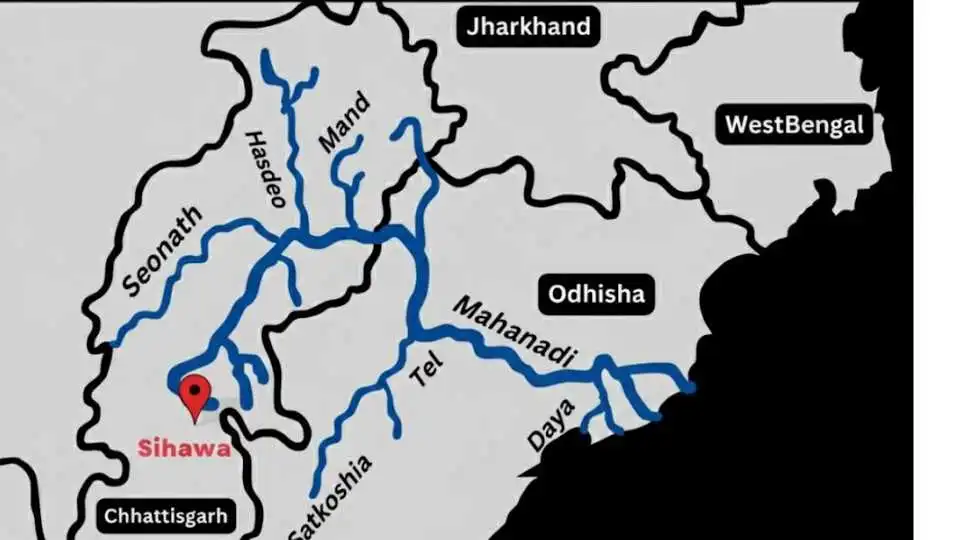
Important Tributaries:
- Seonath (Shivnath) River
- Hasdeo River
- Mand River
- Ib River
- Ong River
- Tel River
- Jonk River
These tributaries significantly expand the Mahanadi basin and increase its water-carrying capacity, especially during the monsoon season. Tributaries are a favourite topic in CGPSC prelims.
Mahanadi River Basin
The Mahanadi basin is one of the most important river basins of eastern India. It covers large parts of Chhattisgarh and Odisha, along with small portions of neighbouring states.
Key Features of the Basin:
- Fertile agricultural land
- Dense population in delta region
- Rich forest cover in upper basin
- Important irrigation projects
The basin plays a crucial role in food security and regional economy.
Dams and Irrigation Projects on Mahanadi
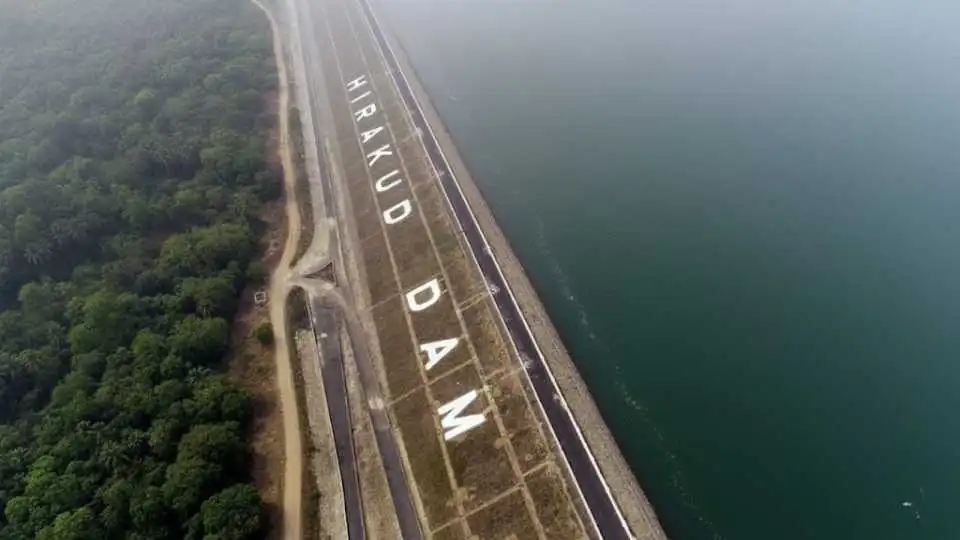
The most famous project on the Mahanadi River is the Hirakud Dam, one of the longest earthen dams in the world.
Importance of Hirakud Dam:
- Flood control
- Irrigation support
- Hydroelectric power generation
Apart from Hirakud, several medium and minor projects have been developed in the upper basin region.
Economic and Environmental Importance
The Mahanadi River supports:
- Agriculture (rice-dominated farming)
- Drinking water supply
- Industrial water needs
- Fisheries and livelihoods
Environmentally, the river sustains wetlands, forests, and biodiversity, particularly in its deltaic region.
Importance of Mahanadi River for CGPSC & UPSC
For competitive exams, Mahanadi River is important under:
- Physical Geography – river origin, drainage pattern
- Indian Geography – east-flowing rivers
- Chhattisgarh Special Studies – rivers and irrigation
- Environment – river basin ecology
Questions are often asked directly or indirectly from these areas.
CGPSC Prelims MCQs – Practice
Frequently Asked Questions (FAQs)
Q1. Where does the Mahanadi River originate?
Ans.: From the Sihawa Hills in Dhamtari district of Chhattisgarh.
Q2. Which states are drained by the Mahanadi River?
Ans.: Primarily Chhattisgarh and Odisha.
Q3. Why is Mahanadi River important for CGPSC?
Ans.: Due to its origin in Chhattisgarh, major tributaries, basin, and irrigation projects.
Conclusion
The Mahanadi River is not just a major river system of eastern India but also a lifeline for Chhattisgarh and Odisha. Originating from the Sihawa Hills, the river plays a vital role in geography, agriculture, economy, and environment. Its relevance in CGPSC and UPSC examinations makes it an essential topic for aspirants.
Trust & Freshness Note
This article is prepared according to the latest geography syllabus relevance for CGPSC and UPSC aspirants. For basic understanding of Indian river systems, standard NCERT Geography texts can be referred.