Light Year vs. Parsec vs. AU: Space Measurement Units Explained
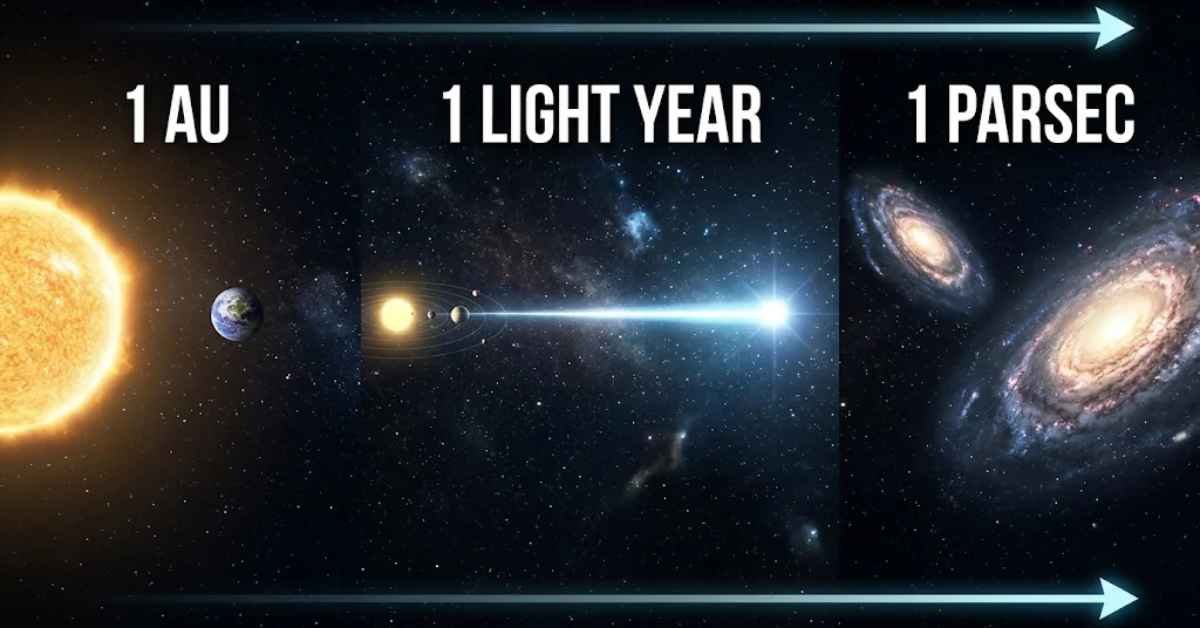
Discover the difference between a Light Year, Parsec, and Astronomical Unit (AU). Learn which space measurement unit is the biggest and when astronomers use them.

Discover the difference between a Light Year, Parsec, and Astronomical Unit (AU). Learn which space measurement unit is the biggest and when astronomers use them.
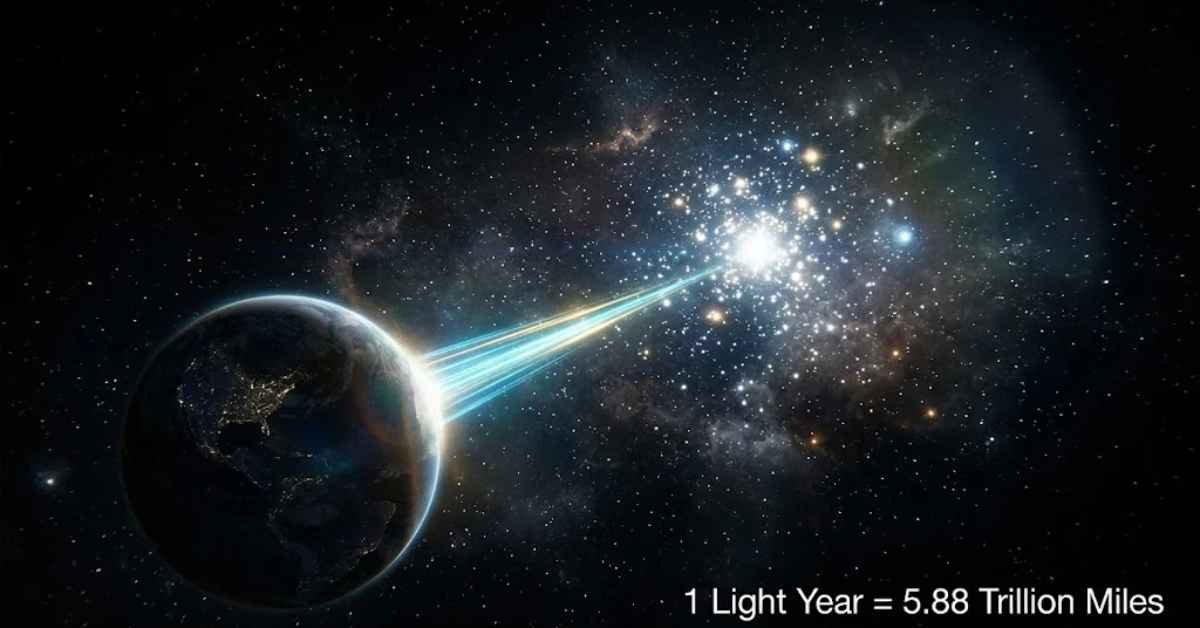
what does a light year measure Because it contains the word “year,” it is completely natural to assume that a light year is a measurement of time. However, this is one of the most common misconceptions in space science. Quick Answer: What does a light year measure? A light year measures distance, not time. Specifically, it is the total distance that a beam of light travels in a vacuum over the course of one Earth year—which equals roughly 5.88 trillion miles. In this guide, we will break down exactly how far a light year is, why astronomers use it instead of miles, and how looking across light years actually allows us to look back in time. What Is a Light Year? Despite its name, a light year doesn’t measure time; it measures distance.A light year is the distance that light travels in one year, moving through the vacuum of space.Light travels at a speed of approximately 299,792 kilometers per second (or about 186,282 miles per second).That means, in one year, light travels about 9.46 trillion kilometers (or 5.88 trillion miles).So, when astronomers say a star is 4 light years away, they mean that light from that star takes 4 years to reach us, traveling at that incredible speed. Why Can’t We Use Kilometers or Miles in Space Imagine trying to measure the distance from Earth to the nearest galaxy using kilometers; it would require a number with dozens of zeroes! It becomes too large and impractical. That’s where the light year comes in handy. It simplifies huge distances into easily understandable terms.Instead of saying:“The Andromeda Galaxy is approximately 9,460,000,000,000,000,000 kilometers away,”astronomers simply say:“It is about 2.5 million light years away.” Why Does the Light Year Matter in Astronomy? Real-World Examples 1. Proxima Centauri, the closest star to Earth (after the Sun), is about 4.24 light years away. 2.The Milky Way is about 100,000 light years wide. 3.The Andromeda Galaxy, our nearest major galactic neighbor, is 2.5 million light years away. Why Students Should Understand Light Years For school and competitive exams, especially in science and astronomy, understanding this concept builds a solid foundation in astrophysics. It also sparks curiosity; what else is “out there” in the universe? The term “light year” represents one of the most fascinating ideas in science. It bridges the gap between space and time, helping us not only measure how far things are but also how far back in time we’re looking. So next time you hear someone say, “That technology is light years ahead,” you’ll know; they’re not just talking about time. They’re talking about distance so vast, it challenges the imagination. FAQs